

At A Glance:
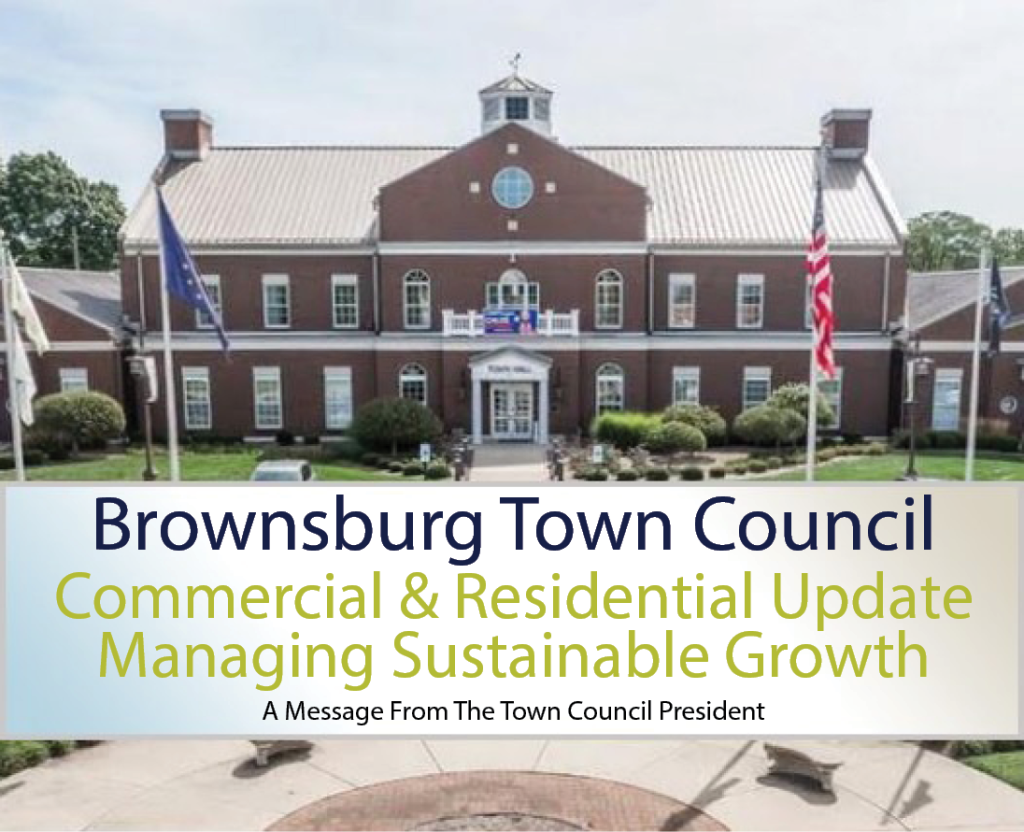
What: In a recent message to Brownsburg and area residents, Town Council President Ben Lacey gave his insights into managing sustainable growth.
Summary: Town leaders say commercial growth has reduced tax pressure on homeowners, boosted jobs, and strengthened income-tax revenue — a strategy they argue is essential as state law limits future property tax growth.
BROWNSBURG —Town Council President Ben Lacey says Brownsburg’s push for commercial development is paying off — helping stabilize taxes while funding essential services.

In a memo to residents, Lacey said that without commercial growth since 2019, the town’s tax rate would have risen an estimated 8.9% by 2026. Instead, the rate declined by 0.8%. Commercial projects have added more than $352 million in assessed value and created roughly 4,418 jobs since 2020, driving an 88.5% increase in Local Income Tax revenue.
Today, about 63.5% of the town’s $21 million General Fund comes from income taxes, with 26.3% from property taxes — a shift Lacey says is critical as Senate Enrolled Act 1 limits residential property tax growth statewide.
Lacey also defended the use of tax abatements, pointing to projects like HarperCollins Publishers and Labcorp as examples of developments that began generating significantly higher tax revenue and jobs even during phased-in incentive periods.
He said Brownsburg is intentionally targeting higher-value residential growth and carefully reviewing infrastructure, safety, and service impacts before approving new projects.
To send an email to Town Council President Ben Lacey — blacey@brownsburg.org
To send an email to the entire Town Council — towncouncil@brownsburg.org
The complete message appears below.
Planning for a Balanced, Sustainable Brownsburg
As Brownsburg continues to grow, one of the Town Council’s most important responsibilities is ensuring that growth is intentional, balanced, and fiscally responsible. Our community’s success depends on how well we plan for both commercial and residential development.
I want to share how the Town of Brownsburg is approaching long-term planning and why our commercial and residential strategies work hand in hand to maintain services and invest in the future of our community.
Why Commercial Growth Matters
A common question we hear is: “Why does the Town focus so much on commercial growth?” The answer is simple, commercial development helps keep residential taxes lower.
Commercial growth is a critical part of keeping Brownsburg financially stable and residential taxes lower over time. Commercial properties contribute significant taxes while requiring fewer day-to-day services. They help offset the cost of services residents rely on, including public safety, street maintenance, snow removal, parks, and infrastructure.
Without growth in commercial and business assessed value after 2019, the Town’s tax rate would have increased an estimated 8.9% in 2026. For a typical homeowner, that would have meant about $135 more per year in property taxes, with roughly $25 supporting Town services. Instead, sustained commercial investment helped reduce the Town’s tax rate by 0.8% from 2019 to 2026.
Since 2019, commercial development has added more than $352 million in assessed value, helping shift the tax burden away from homeowners. Today, approximately 35% of property in Brownsburg is taxed at the 3% commercial cap, helping stabilize the Town’s overall tax base. Multi-family residential properties like apartments and agricultural properties make up 22%, and residential properties make up 43% of the tax base.
Since 2020, new commercial development in Brownsburg has created approximately 4,418 jobs, driving an 88.5% increase in Local Income Tax (LIT) revenue since 2019.
Today, the General Fund, the primary fund for resident services, is supported by a more balanced revenue mix: approximately 63.5% from LIT and 26.3% from property taxes, totaling about $20 million of the Town’s $21 million General Fund.
This balance is increasingly important as Senate Enrolled Act 1 (SEA 1) reduces the growth of residential property tax revenue statewide, shifting more responsibility onto income-based revenue sources.
Why the Town Uses Tax Abatements for Commercial Development
Another question we often hear is: “If commercial growth is so important, why does the Town offer tax abatements to attract businesses?”
It’s a fair question, and the answer comes down to long-term value and responsible investment. Tax abatements are one of the few tools that the state allows municipalities to use to attract business to the community. When a business is considering a relocation or expansion, they look at several communities across the country that may meet their needs. Incentives like a tax abatement can be the deciding factor in whether or not that company decides to make Brownsburg its home instead of another community.
A tax abatement is not a permanent tax break or a gift of public funds. It is a temporary, phased-in reduction, up to a maximum 10-year period, that helps offset the upfront cost of development.
Before development, many commercial sites generate little to no tax revenue, yet still require public services such as roads, police patrols, and infrastructure maintenance. Receiving a portion of taxes from a productive property is far better than continuing to receive minimal revenue from vacant land.
A recent example is the HarperCollins Publishers project. Prior to development, the site generated approximately $6,082 per year in total property taxes, with $2,755 going to the Town. Once fully operational, the project is expected to generate approximately $310,695 in property taxes in its first year, even while under abatement. Each year, the taxable value increases incrementally, and once the abatement period ends, the property will be taxed at its full value.
Every incentive is reviewed through a public process. Companies must meet job creation and wage requirements, and the Town’s Economic Development Director conducts annual compliance reviews to ensure expectations are met.
Residential Growth That Strengthens the Community
Intentional residential growth has become even more important as SEA 1 takes effect. While SEA 1 is intended to provide tax relief for homeowners, it also limits the growth of property tax revenue available to local governments. As service costs continue to rise, communities must be increasingly deliberate in ensuring that new development contributes appropriately to the cost of services. As property tax growth slows under SEA 1, Brownsburg’s strategy relies on a balanced mix of residential and commercial value and income-generating employment opportunities. Projects like LabCorp, which will bring jobs with an average hourly wage of $45.90, help strengthen LIT revenues, an increasingly important source of funding for Town services.
According to the U.S. Census Bureau, the median home value in Brownsburg in 2024 was $309,400. On a median-priced home, the total annual property tax bill is approximately $3,094, after consideration of property tax caps. Of that amount, about 20%, or roughly $618 per year, supports Town services, including public safety, street maintenance, snow removal, and community amenities like parks and infrastructure projects. The remaining portion supports the Brownsburg Community School Corporation, Hendricks County, Brownsburg Public Library, Brownsburg Fire Territory, and the local township.
The Town is intentionally targeting the development of higher-value single-family homes to ensure residential growth will be able to support the services it will need. Homes valued above the median value generate additional revenue that helps fund services and reduces financial pressure on existing residents.
This approach ensures new residential growth is sustainable, not subsidized by current homeowners.
Planning for Infrastructure, Safety, and Capacity
Growth also requires foresight. Every development decision is evaluated through the lens of:
- Infrastructure capacity — roads, utilities, and connectivity
- Public safety needs — police, fire, and emergency response
- Capital planning — facilities, equipment, and long-term maintenance
Before a project is presented to the Advisory Plan Commission, it is reviewed by the TECH Committee, which includes representatives from the school corporation, fire territory, utilities, and other local partners. Each entity has the opportunity to assess potential impacts and ensure services can be maintained.
Looking Ahead
Brownsburg’s recent progress reflects a renewed focus on intentional, data-driven planning. While no plan is perfect, the Town Council remains committed to making informed decisions that protect taxpayers, maintain essential services, and support sustainable growth.
By balancing commercial opportunity with thoughtful residential development, Brownsburg is strengthening its financial foundation for the future.
Ben Lacey
Town Council President
>> Click Here << Link to Town of Brownsburg Press Release via Website
Earlier Sentinel Reporting Mentioned in this article:
>> Click Here << Labcorp Selects Brownsburg, New Central Laboratory Services Campus
>> Click Here << HarperCollins Announces Brownsburg Supply Chain Facility

Content courtesy of:
Town Council / Town of Brownsburg Press Release
The Editor